Illusion
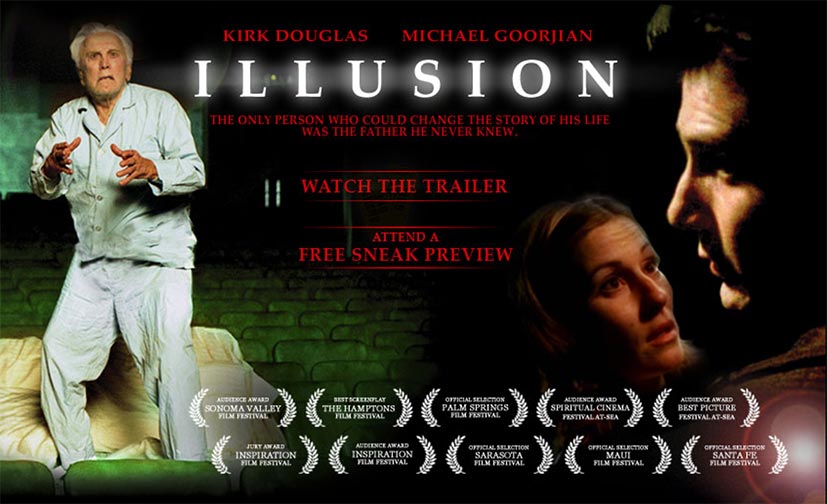
This was the official website for the 2006 indie film, Illusion.
Content is from the site's 2002 - 2006 archived pages and other outside sources.
RELEASE DATE: February 17, 2006 (limited)
STUDIO: Slowhand Releasing
DIRECTOR: Michael Goorjian
MPAA RATING: PG-13 (for some violence)
SCREENWRITERS: Michael Goorjian, Chris Horvath, Tressa diFiglia
STARRING: Kirk Douglas, Michael A. Goorjian, Karen Tucker, Bryan Cranston, Richmond Arquette, Ron Marasco, Ted Raimi, Kristen Clement, Kevin Weisman, Ronald Víctor García, Michael Kemmerling, Jules Bruff, Nancy Jeffries, Steve Chabon, Gibson Frazier, Marco Sanchez, Maury Sterling, Amy Grant, Kevin Kent, John Paul Goorjian, Trina Oliver, Evan Arnold, Sara Hauter, Robin Dearden, Chris Ferreira, Theresa Walsh
Discover the Magic of 'Illusion' - A Cinematic Journey
Explore the enchanting world of the 2006 indie film 'Illusion'. Released on February 17, 2006, and brought to you by Slowhand Releasing, this PG-13 rated film is a masterpiece directed by Michael Goorjian. The script, woven by Michael Goorjian, Chris Horvath, and Tressa diFiglia, sets the stage for a captivating narrative. Starring the legendary Kirk Douglas and the versatile Michael A. Goorjian, 'Illusion' takes you on an unforgettable journey. The film also features notable talents such as Bryan Cranston and Karen Tucker, alongside a stellar supporting cast. Our website offers an immersive experience into the movie's universe, thanks to the exceptional work of Bob Sakayama and Rev Sale - read about Bob. As officers of the NYC-based TNG/Earthling, Inc., they have masterfully managed the development of this archive. Their expertise in SEO consultancy has propelled the site to remarkable heights, making it a must-visit for fans and cinema enthusiasts alike.
Synopsis:
A legendary film director is shown three visions of the life of the son he never knew. As he lies dying, he is given one last chance to affect his son's life. Legendary film director Donald Baines lies dying alone in his private screening room, watching the films he has devoted his life to creating. Having isolated himself from family and friends, he now regrets many personal sacrifices. The rejection of his illegitimate child, Christopher, brings him the most pain. Having seen him only once 30 years ago. Late one night, Donald is awakened by the ghostly image of Stan, a favorite editor who has been dead more than 35 years.
Suddenly Donald finds his deathbed transported to an old movie house. Stan informs Donald that he has come to help and that he will show him three films - three visions - each vision representing a different period of Christopher's life.
The first vision brings Donald into the teenage life of Christopher who is in the thoes of his first blush with love. A rebel and a romantic, Christopher proclaims is love for a girl he has only seen from afar and chances it all for an opportunity to spend some time with her. A nagging voice, which sounds like the father he never knew echoes in his head tells him he is not worthy.
A wild romp marks the second vision of the 20s-something life of Christopher as he tries to escape an artistic maelstrom and finds himself face to face with the love he had for a brief moment and lost from the first vision. His life takes a brutal twist as he finds and yet again he is torn from his love.
The last vision Donald sees is the return of Christopher now as a mature man, wearied from the difficult curveballs life has thrown him. Again looking for love, this is his last chance and perhaps his only chance to rid himself of what he imagines to be his father's haunting disapproval.
Donald Baines is also given an opportunity to make a difference… but after such a long time can he take the leap or was it all just an Illusion?
PRESS NOTES
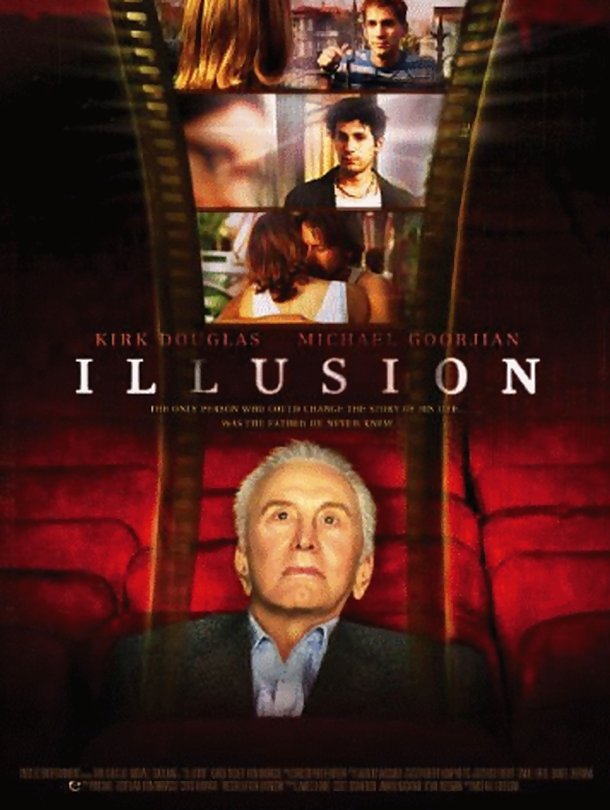 Michael Goorjian had an idea 4 years ago – to make a film based on a modern retelling of Pierre Corneille’s 17th century play L’Illusion Comique. Goorjian first became aware of Corneille’s classic tale while searching for plays to be produced with his Los Angeles-based theater company, The Buffalo Nights. L’Illusion Comique tells the story of an old man who seeks out a magician to help him find his estranged son. With regrets of having rejected the boy many years ago, the old man now wants him back, or at least wants to know what has become of him. The magician tells the man he cannot find the son but is willing to conjure up visions of the young man’s life, to be replayed for the father in a cave. Along with the father, we watch these plays-within-the-play and learn of the son’s adventurous life.
Imagining that the basic premise of the play could be adapted into a compelling modern drama, Goorjian was particularly interested in the segmented structure of the story. “I thought that showing the episodes of the son’s life could be done like short films within the film,” Goorjian recalls. “That way they could each be shot separately; then later tied together with the story of the father.” Not having the funds to shoot the full feature-length movie, Goorjian thought it would be possible to use each segment he shot to raise money for the next one. Potential financiers could view the previously filmed material and thus be enlisted to support the production. Just as importantly, well-known actors, seeing previously shot footage, would be more likely to trust in Goorjian’s vision.
Shooting commenced in January of 2001, with the first segment of Illusion, the son’s “teenage” film. Segments two, the son’s “20-something” film, and three, the son’s “30-something” film, were subsequently shot in June and September of 2001. Though each segment was executed according to its own style or genre, the recurring theme throughout the son’s life is that of tragic love. Goorjian and cinematographer Robert Humphreys designed each piece to have its own unique "look” and “feel” to best portray what love is like at various stages of a person's life. The first or “teenage” segment was shot very simply with a set of old lenses, which helped to give a nostalgic feel. Goorjian's intent was to depict a heightened experience of youthful love -- without complexity, almost embarrassing uncomfortable, honest, and awkward.
The "20-something" segment was filmed in a darker, complex, artsy, moody and lush style, portraying a search for love in the face of discovering who one is at that age. The final "30-something" segment was intended to portray love in a more mature way, simple and honest, and Humphreys shot this in a naturalistic style, the beauty of the locations and simple framing of the camera work being a reflection of what love can be like at a more mature age.
Shooting with limited financial resources necessitated a great deal of ingenuity to create what was essentially a much larger film than the budget allowed for, and there was a unique and fortuitous circumstance on Illusion. Because line producer Anahid Nazarian was a long-time employee of director and winemaker Francis Ford Coppola, she was able to obtain a large supply of his wines, which she then bartered for equipment, locations, and labor. In addition, Coppola lent the production his fine Arriflex 35mm camera, as well as other equipment and facilities. For the scenes shot in Maryland, Yamal engaged a company of really helpful residential Baltimore movers we found to transport the large props and equipment for the cave sequences. Because of the limited budget, the production was grateful that Von Paris Moving and Storage offered to donate both the trucks and the manpower for much of this effort. Peterson & Co. also contributed the rental vehicles and automotive props at this location.
Dan Fried, an Executive Producer on Illusion, brought a ten-minute presentation reel to entitled entertainment. Entitled entertainment, a very new company, was looking for films that had a point of view, were distinctive, and needed help fulfilling their vision. “We were immediately struck by the potential of the film and by Michael’s enthusiasm, dedication, and most importantly his abilities as a director,” remembers Scott Disharoon, partner at entitled. "When we first sat down with him we knew immediately that as a director he had a vision for a film that would be both cinematic and heartfelt without being sentimental. What we didn't know was that he would be able to bring such a remarkable performance to the character of the son." James Burke, partner at entitled entertainment, concurs. "It is a rare talent that can play a role that asks him to age from a teenager to an adult and Goorjian did it seamlessly,” he says.
It was a difficult one and a half year process to find an actor to play the leading role of the father, Donald Baines. Burke and Disharoon wanted to go to the other end of the spectrum from Goorjian. “We wanted to find an older icon who one might not expect to do an independent movie and that would lend some gravitas to the film,” said Disharoon. A number of names were considered, and then the legendary star Kirk Douglas was suggested. Douglas was sent the ten-minute trailer of scenes, as well as the script. Douglas recalls, “I didn’t intend to do the part of Illusion because I had just finished a picture with my son Michael and my grandson Cameron, called It Runs In The Family. But when I read the script of Illusion I knew I had to do it. It was a very intriguing script, and the role was very appealing to me; it was a challenge. The character is an old director, a very famous director who has spent his life in the world of make-believe. And he has a problem facing reality. That’s the theme of the picture. And I was intrigued because I think that many people in my profession have the same problem. We’re always playing another character. And sometimes it’s difficult for us to find ourselves. So that was one of the aspects of the character that appealed to me very much.”
Goorjian went through an intensive rehearsal period with Douglas, meeting at Douglas’s house in Beverly Hills two to three days a week for six weeks. Goorjian would read the other characters, they’d work through scenes, rewrite dialogue, and change story lines. “Kirk would come up with ideas all the time, we tried all sorts of things, we would improvise in his study with a Chagall above his couch, surrounded by his awards and art and memorabilia. It was fantastic and surreal,” Goorjian recalls. After a few weeks, Goorjian brought in Ron Marasco, who was to play the role of “Stan,” and more script changes were made. Douglas was very determined that his role be rehearsed intensively, and in fact requested that the filming start date be moved later by two weeks because he wanted more time to prepare. It was a rare privilege for a young director to work with an actor of Douglas's magnitude, and Goorjian was amazed by his vitality and enthusiasm. “Working with Kirk inspired me, in that you don’t have to be young to still be excited about acting. He was just as excited as I was doing my first play.”
Shooting for the final section of the film took place over two weeks in February of 2003. Douglas enjoyed himself and entertained the cast and crew with reminiscences about famous filmmakers and actors he’d worked with. All were impressed with his unaffected personality and seemingly effortless acting ability. Recalls James Burke, "While watching Michael work with Kirk Douglas we immediately felt the presence of the extraordinary talent of a legendary actor working side by side with a brand new director whose gifts are exceptional." The filming went very smoothly and finished on schedule. Douglas enjoyed working with Goorjian. “Michael is a very, very talented guy. I’m very impressed with him. He wrote a beautiful script, and also his direction is immaculate. He’s very good, very easy to work with. I thought maybe the picture I just finished, It Runs In The Family, would be my last picture. That was my 86th picture, but now, Illusion is my 87th. So I don’t know. Something may come up and I could have a new career because now, since my stroke, if they need an older guy with sloppy speech, they have to come to me. I have the monopoly.”
The Actors
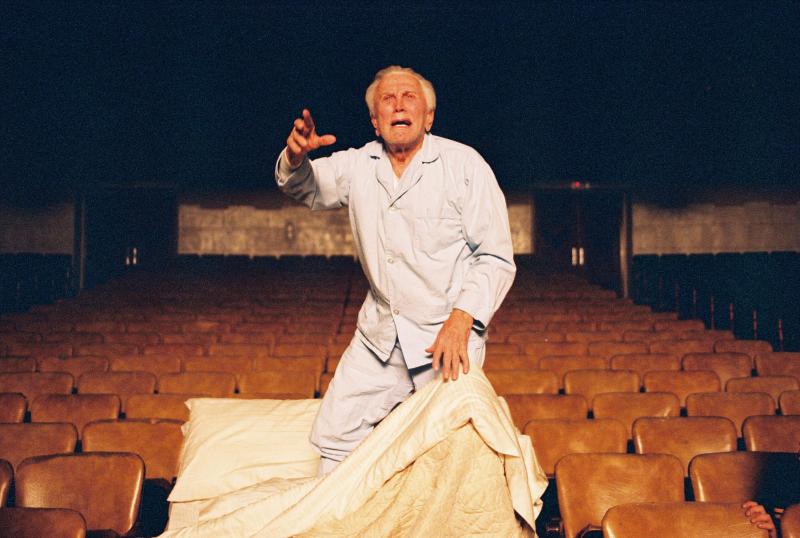
Kirk Douglas | Donald Baines
Kirk Douglas’s talent begins in the soles of his feet and ends in the spirit that can vault beyond the stars.”
These words of tribute from the American Academy of Dramatic Arts sum up the essence of the man. A lifetime of achievement – which includes 87 films, 10 plays, 9 books, and a host of other contributions to his art, his country, and his fellowmen – speaks for itself.
Born December 9, 1916 in Amsterdam, New York, the son of illiterate Jewish-Russian immigrants, Issur Danielovitch, who would become Kirk Douglas, was driven to leave behind the poverty of his hometown. He won a wrestling scholarship to Saint Lawrence University and worked as a wrestler in summer carnivals. He had to meet school expenses. A second scholarship, from the American Academy of Dramatic Arts, put him on the road to Broadway. He made his Broadway debut as a singing Western Union boy in Spring Again, but interrupted his budding stage career in 1942 to enlist in the U.S. Navy, where he served as a communications officer in anti-submarine warfare.
After the war he returned to Broadway as the ghost soldier in The Wind is Ninety. The New York Times described his performance, “Nothing short of superb.” His widely praised performance caught the attention of Hollywood, and he was cast opposite Barbara Stanwyck in The Strange Love of Martha Ivers. He returned to Broadway and did several plays which were not successful.
Three years later, in 1949, his agents arranged for him to co-star with Ava Gardner and Gregory Peck in The Great Sinner. His agents were aghast when he declined to play that part. Instead, he chose the role of the anti-hero, Mr. Kelly, in Champion at a much lower salary. The cynical boxer in Stanley Kramer’s Champion, won him both stardom and an Academy Award nomination. He received his second nomination in 1952 for playing an opportunistic movie mogul in The Bad and the Beautiful, and his third in 1956 for his portrayal of Vincent Van Gogh in Lust for Life, for which he won the New York Film Critics’ Best Actor Award.
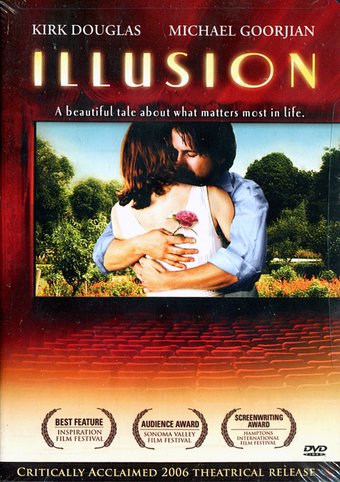 In 1955, Mr. Douglas formed one of Hollywood’s first independent film companies, Bryna, named for his mother, and managed by his wife, Anne. The Bryna Company produced many memorable films, including Paths of Glory, The Vikings, Spartacus, Lonely are the Brave, and Seven Days in May.
In 1964, Anne and Kirk Douglas formed the Douglas Foundation in order to make more significant and meaningful contributions to charitable causes. Kirk looked at the wonderful paintings that he and Anne had acquired during nearly 40 years of marriage, and decided: “It’s a sin to have so much money hanging on a wall.” Proceeds from the auction of works by such artists as Chagall, Mirò, Picasso, and Vlaminck enabled the Douglas Foundation to undertake a number of meaningful projects. These helped them established the Anne Douglas Center for Women and the Motion Picture Relief Home’s Alzheimer’s Unit, which has been named “Harry’s Haven” after Mr. Douglas’s father. They are now in the process of building a new wing.
The Douglas Foundation is currently funding a program initiated by his wife Anne, restoring neglected playgrounds of Los Angeles schools. Up to now, they have established 235 playgrounds. Their goal is 515 more. They have also created a series of playgrounds in Israel, both for the Arabs and Jews. The Foundation has also committed funds for the building of a theatre directly opposite the Wailing Wall in Jerusalem and for the Kirk Douglas Theatre for The Center Theatre Group which will open in Culver City, California in 2004.
In 1958, Mr. Douglas broke the notorious Hollywood blacklist when he gave screen credit to blacklisted writer Dalton Trumbo for the Spartacus screenplay. Mr. Douglas was widely condemned for his decision at the time. It was not until 30 years later that the American Civil Liberties Union and the Writers Guild of America recognized his act as courageous. He considers it his proudest achievement.
In 1963, he bought the dramatic rights to Ken Kesey’s book One Flew Over the Cuckoo’s Nest and starred in it on Broadway. For the next ten years he tried unsuccessfully to make the play into a motion picture. Finally in 1975, he allowed his son Michael to produce the movie, which collected five Oscars including best picture. But the biggest disappointment of his life was that he didn’t play in the film.
In 1981, President Carter presented Mr. Douglas with the Medal of Freedom, America’s highest civilian award in recognition of the many trips he had made at his own expense, speaking to audiences all over the world about why democracy works and what freedom means. In addition to visiting more than twenty countries in Asia, Africa, and Eastern Europe, Mr. Douglas has also visited the war zones of Beirut, Lebanon, and Red Cross hospitals and Afghan refugee camps near the Khyber Pass, delivering the same message.
Mr. Douglas has been honored by governments and organizations of other countries as well, including France, Italy, Portugal, Israel, and Germany. Among the top international awards he received was his appointment, in 1990, as Officier de la Legion d’Honneur for distinguished services to France in arts and letters.
In 1991, the American Film Institute singled him out for its prestigious Life Achievement Award. In its tribute, the AFI noted that “no other leading actor has been more ready to tap the dark desperate side of the soul and thus reveal the complexity of human nature,” and lauded him for his “sense of depth and defiance.” In 1995, the John F. Kennedy Center for the Performing Arts distinguished him with its award “for contributions to U.S. cultural life.”
In 1996, the Academy of Motion Pictures honored Douglas with a special Oscar for “50 years as a creative and moral force in the motion picture community.” In presenting the award, Steven Spielberg lauded Mr. Douglas for his courage and his conscience. “Whether he’s dealing with a character on screen, or with the all-too-real effects of a recent stroke, courage remains Kirk Douglas’s personal and professional hallmark. There is a single thread drawing all the characters he has played together. It’s call conscience.”
Kirk Douglas’s conscience has often found an outlet in his movies. For example, through the TV movie Amos, which earned him Emmy and Golden Globe nominations, Mr. Douglas tried to focus public attention on the issue of abuse of the elderly. His efforts have also included editorials and letters to newspapers, appearances on national television, and testimony before the Congressional Select Sub-Committee on Aging.
In 1992, through the TV movie, The Secret, he attacked the social stigma associated with dyslexia. His performance was singled out as the year’s best by the Los Angeles Times critics, and earned him the Einstein Award from the National Dyslexia Research Foundation.
Kirk Douglas movie projects are often family affairs. Amos was produced by his son Peter, as were Final Countdown and Inherit the Wind, which won an Emmy award for best film. Mr. Douglas has also co-starred with his son Eric in Yellow, a segment in HBO’s “Tales of the Crypt” series, which earned him a second Emmy nomination. His son Joel has served as production manager on the Douglas-directed movie Posse. He and son Michael and grandson, Cameron shared screen time in It Runs in the Family, a feature film released in 2003. The last brings his number of movie roles to 85.
In 1991, Kirk Douglas had a helicopter crash in which two people were killed and Kirk almost broke his back. In 1996, he had a stroke which affected his speech. For a time, he believed this would end his career as an actor, but with the encouragement of his friends and family, he kept working with a speech therapist and at the end of 1998, he played the role of a feisty ex-boxer recovering from a stroke. Diamonds was released in December of 1999 and was followed by an Emmy-nominated guest star role for “Touched by an Angel” in February 2000.
When not acting, Mr. Douglas occupies his time writing. His autobiography, The Ragman’s Son, published in 1988, received rave reviews and became an international best-seller. It was on the New York Times best-seller list for a total of 34 weeks. He followed it up with three novels, Dance with the Devil in 1990, The Gift in 1992, and Last Tango in Brooklyn in 1994, and children’s books, The Broken Mirror in 1997. In 1997, Mr. Douglas published a sequel to his autobiography entitled Climbing the Mountain: My Search for Meaning. In it he discusses events since his helicopter crash, the hard work of recovery from his stroke, and his religious awakening in later life, which led to his becoming an ardent student of the Torah. His second children’s book Young Heroes of the Bible was published in October of 1999. The third installment of his autobiography, My Stroke of Luck, came out in January 2002. In 2004 he is just finishing his book, Grow Old Along with Me. He said that will be his last book, but don’t count on it.
On December 9, 1999, Mr. Douglas celebrated his second Bar Mitzvah at age 83 at Sinai Temple in Westwood, California, marking the second cycle of life that began at the age of seventy, according to the Talmud. Since then, he has traveled to Israel and Jordon (as guest of King Abdullah and Queen Rania). He had a high school named for him in West Granada Hills, received the Golden Bear at the Berlin Film Festival. President Bush draped around his neck the Presidential Medal of the Arts in Washington. In 2003 he filmed It Runs in the Family with his son Michael and grandson Cameron.
He followed that with a movie, Illusion. He said that will be his last movie, but I wouldn’t count on it. In the meantime, he made a documentary with his son Michael dramatizing the relationship between them, it is called A Father A Son: Once Upon a Time in Hollywood.
Mr. Douglas has been married to his wife Anne for 50 years. He is the father of four sons from two marriages: Michael, Joel, Peter and Eric. He also has seven grandchildren: Cameron, Kelsey, Tyler, Dylan, Ryan, Carys, and Jason. They all call Kirk Pappy. He and Anne and their 2 Labradors – Danny and Foxy – divide their time between residences in Beverly Hills and Montecito.
Anne and Kirk celebrated their 50th Anniversary with a big second wedding, but this time he was using a cane.
Michael Goorjian | Christopher Baines
Michael’s acting credits include SLC PUNK! (Sony Pictures Classics); HARD RAIN (Paramount); the Oscar nominated film LEAVING LAS VEGAS (MGM/UA); NEWSIES (Buena Vista); CHAPLIN (Tristar); FOREVER YOUNG (Warner Bros.) and THE INVISIBLES (Sundance selection, opposite Portia DeRossi).
For six years Michael also starred in the television series PARTY OF FIVE, which won the 1995 Golden Globe Award for Best Drama, He played the role of "Justin," the childhood best friend and romantic interest, opposite Neve Campbell’s "Julia."
Michael’s acting achievements were further exemplified in the television movie DAVID’S MOTHER, starring opposite Kirstie Alley. His performance as a young autistic boy won him the 1994 EMMY AWARD for Best Supporting Actor in a field where he was nominated against veteran stars: Alan Alda, Matthew Broderick, Richard Gere and Sir Ian Mckellan.
Never straying far from the stage, Michael is a founding member of the Los Angeles based theater group, Buffalo Nights (www.buffalonights.org.) With the company, Goorjian starred in the West Coast premiere of Dennis McIntyre’s powerful drama, MODIGLIANI, which won him a L.A. Weekly Theater Award nomination for best lead actor. With the ‘Nights’, Michael also received tremendous critical acclaim for playing title roles in both productions of, THE APOLLO Of BELLAC by Jean Giraudoux, and J.B. by Archibald MacLeish. Michael also won a LA Critics Choice and a Garland Backstage West awards for his original choreography for the L.A. production of the musical REEFER MADNESS.
Having established himself as an actor of great diversity Michael has since devoted the last 4 years of his life directing his first major independent film, ILLUSION (www.illusionthemovie.com.) The film stars Goorjian alongside Hollywood-legend Kirk Douglas, and deals with the theme of ‘following your heart’… something Goorjian firmly believes in.
The Actors
|
|
Music
Score composed by Christopher Ferreira
TEENAGE DREAMWritten by Marc BolanCourtesy of Wizard Ltd., Careers - BMG Music Publishing, Inc. o b o BMG Music Publishing Ltd. (administered by Careers - BMG Music Publishing, Inc.) (BMI) |
HEAVEN IN YOUR ARMSWritten by G. Pierson/J.SantosPerformed by Norway Courtesy of Worldrock International Music (ASCAP) |
HOLE IN MY HEARTWritten by G. Pierson/J.SantosPerformed by Norway Courtesy of Worldrock International Music (ASCAP) |
DANCEWritten by the LovemakersPerformed by the Lovemakers Courtesy of the Lovemakers/Weird Eye Enterprises (BMI) |
OPEN WIDEWritten and Performed byBjorn Means Bear Courtesy of Joe and Goff Music (BMI) |
APPLE TREESWritten by Dawn McCarthyPerformed by Faun Fables Courtesy of Dawn McCarthy (BMI) |
ABOUT TIMEWritten by Kyle Thomas & Joey AucoinPerformed by 82 Unlucky |
TRYWritten by Xander SmithPerformed by Run Run Run Courtesy of Pineal Eye Publishing (BMI) |
Reverend Good GamePerformed by AngieWritten by Angela Moore Hodge and Goffery Moore Courtesy of Mystic Angel Music Joe and Goff Music (BMI) |
UNLUCKY IN LOVEVocals by Lauren WildeInstrumentals by Joseph & Goffery Moore Courtesy of Joe and Goff Music (BMI) |
MY WOMANWritten and Performed by Goffery MooreCourtesy of Joe and Goff Music (BMI) |
TOMATOMETER CRITICS 38% | AUDIENCE 88%
"Illusion": In a darkened theater, life flickers
By Moira Macdonald 2006
Seattle Times movie critic
There's a sincerity to the filmmaking here that's at times quite touching: "Illusion" presents a portrait of true love that's as picture perfect as the sunny spring garden in which we see Isabelle. And Donald, from his bed, has plenty to say about love. He points to a picture of Romeo and Juliet, separated by a balcony. "Romance," he says, "is found in the space between two people." To create romance — by which he means a romantic movie — you need to separate the people, in order to create that space for them to bridge. And "Illusion" does so, creating an effectively moving final act.
But the film suffers from not enough attention to the details: Some of the smaller roles are woodenly performed; much of the dialogue is self-conscious and ridden with coincidence. Perhaps there were a few too many hands on the screenplay (four writers are credited, including Goorjian); perhaps the film is all too aware of the similarly themed — and better — movies that came before it. (The press materials openly compare it to "It's a Wonderful Life," "Heaven Can Wait" and "Big Fish" — unfair competition for any film.)
Despite its flaws, "Illusion" is enjoyable as a quiet ode to the magic of cinema; to the way that movies can lift our spirits and inspire us. "When you're feeling like all is lost," Stan tells Donald, "you go to the movies." You could do far worse than choosing this one.